The period after treatment


Once the procedure is complete, the healing process begins. To ensure the best conditions for hair growth, we recommend following the medical plan you have been given.
Antibiotics help reduce the risk of infection after the procedure and support the body's natural healing process.
The first 12 days following the procedure are crucial for the healing process. During this period, the transplanted hair follicles need time to anchor themselves; therefore, it is important that you strictly follow the clinic's recommendations.
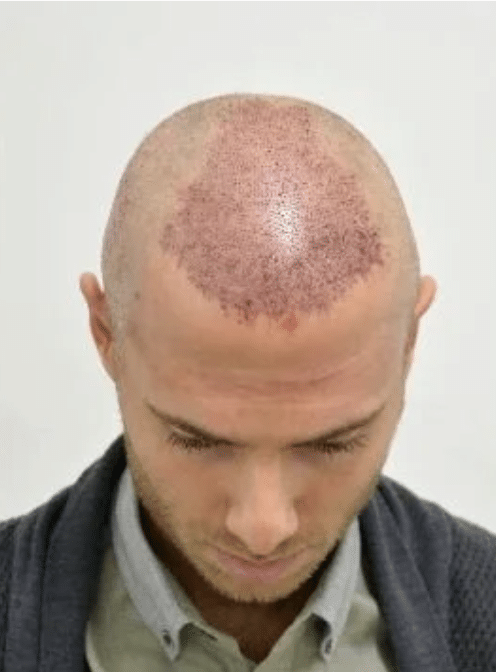
It is normal to experience mild redness, swelling, numbness, and scabbing in the days following the procedure. These symptoms vary from person to person and are a natural part of the healing process.
Below, you will find information regarding the healing process, as well as an overview of common post-procedure activities and when they can typically be resumed.
Sleeping
You must sleep on your back for the first 5 days. We recommend using the neck pillow provided by the clinic.
Swelling
It is normal to experience swelling in the forehead or around the eyes in the days following the procedure. The swelling typically subsides on its own within a few days.
Scabs
Small scabs will form around the transplanted hair follicles. These are a natural part of the healing process and should be allowed to detach on their own.
The healing process
Itching, redness, and slight numbness in the donor area are normal. Most people find that healing is well underway after approximately 12 days.
After the treatment, it is important to give the transplanted hair follicles time to take root. Below is an overview of the most common activities and when they can typically be resumed.
Sleeping
You can gradually return to your normal sleeping habits. Until then, it is recommended to sleep on your back with your head elevated, preferably using a neck pillow.
Sex
Sexual activity may be resumed.
Movement
You can move normally again without having to avoid bending forward or making sudden movements.
Smoking
You may start smoking again, but we recommend waiting as long as possible.
Alcohol
You may drink alcohol again once the course of antibiotics is finished.
Donor area
You may gently begin touching and scratching the donor area with your fingertips. Avoid using your fingernails.
Exercise and physical activity
You can gradually resume regular exercise such as running, gym workouts, and similar activities.
Headwear
You may wear caps, hats, and other headwear again.
Supplements
You can resume taking hair vitamins, multivitamins, and other supplements once all the scabs have fallen off.
Beach
You may visit the beach again. Sunbathing should still be done in the shade.
Sun and tanning beds
Avoid excessive sun exposure during the first month. After that, you can gradually return to normal activities in the sun.
Pools and swimming
You may use pools and swimming facilities again.
Sauna, spa, and Turkish bath
You may use saunas, spas, steam rooms, and Turkish baths again.
Hair dryer
You may use a hair dryer again, but avoid high heat and keep it at a safe distance from the scalp.
The transplanted area
You may touch the new hair with your hands—it is securely anchored, so there is no need to worry about damaging it. Simply avoid using your fingernails or scratching directly at the transplanted area.
Shaving the donor area
You may trim or shave the donor area (the sides and the back of the neck, where the hair is taken from).
Natural hair products
You may start using wax, hairspray, and other natural styling products.
Cutting the transplanted hair
You may cut the transplanted hair. The new hair is now firmly established, so you can have your hair cut as usual.
Keratin treatment
You may have a keratin treatment if it is part of your normal hair care routine.
Hair color and styling products
You may color your hair and start using stronger chemical styling products as usual.
It is important that you follow the instructions carefully. The aim is to keep the area clean, support healing, and help the scabs loosen naturally without damaging the transplanted hair follicles.
Before you begin


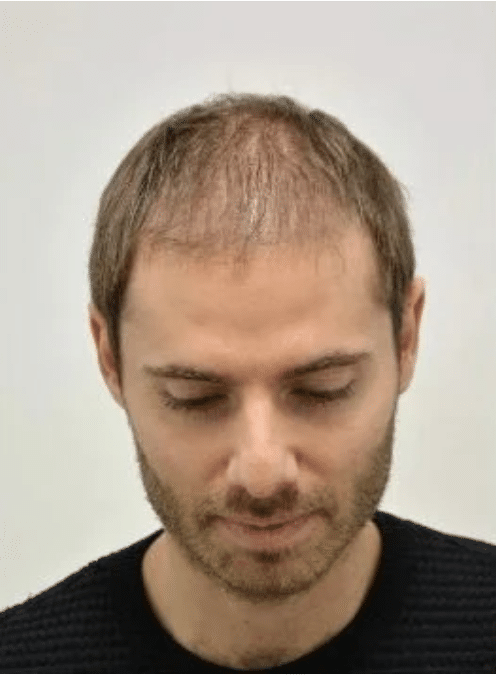
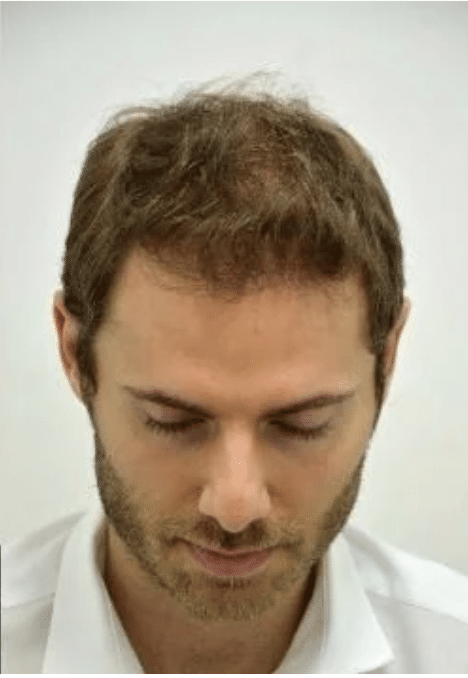
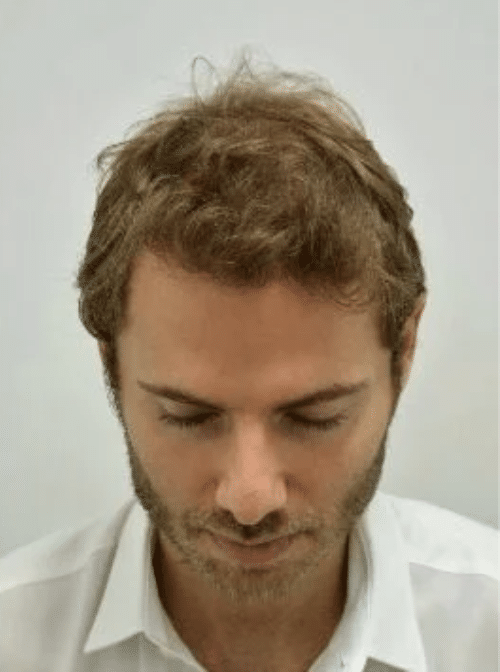
Hair growth following a hair transplant occurs gradually. It is important to remember that progress varies from person to person. Some see early results, while others need to exercise a little more patience.
It is important to remember that hair growth does not happen linearly. There will often be periods where it feels as though progress has stalled, followed by periods of more visible advancement.
The transplanted hairs often begin to fall out. This is known as "shock loss" and is a completely normal part of the process. The hair follicles remain intact beneath the skin and will begin producing new hair later.
By this stage, the healing process should be complete.
If there are still unhealed areas in the donor zone, or if you experience persistent redness, pain, or itching of the scalp—or if numerous pimples have appeared—please send us photos of the areas that concern you.
The hair in the donor zone should have grown back by now. You may benefit from using a dermaroller in conjunction with a serum to stimulate growth. If the hair in the donor zone still hasn't grown back after 3–4 months, please feel free to send us photos. There is no cause for concern, as hair growth can be slower than expected for some individuals.
If you have not undergone exosome treatment, it might be a good idea to start a course of PRP treatments.
You will often start to see more visible growth. The hairs gradually become thicker, and areas of low density begin to fill in.
The hair has now started to grow in, though it may still be fine and thin. If you haven't received exosome treatment, supplementing with PRP therapy can be beneficial.
It is completely normal for the crown area to still lack density. This area often develops more slowly than the rest of the scalp, typically lagging about two months behind. Hair growth on the crown can continue to progress for up to 15–18 months after the treatment.
Now you really start to see the results of the treatment. The front part of the hairline gradually becomes denser, although the hairs may still be slightly fine in texture.
New hairs continue to appear on the ice, but the area may still seem sparsely covered. Continue to use the recommended products described in your hair plan.
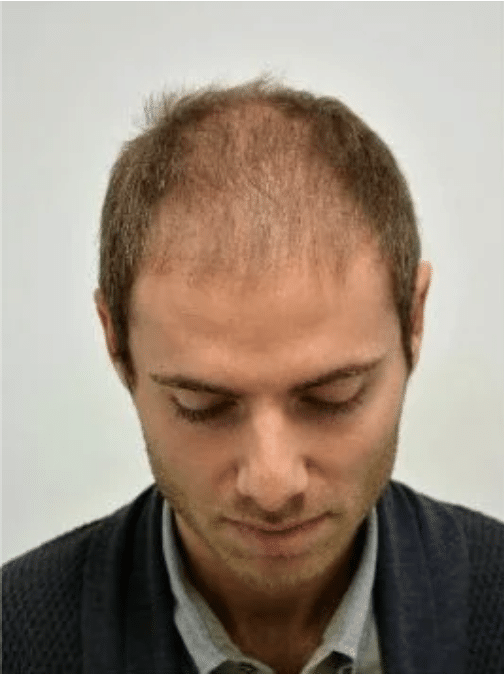
We would very much like to follow your development in the 9th month. Therefore, please send 5 photos taken from different angles so that we can assess the hair growth and the result.
Progress on the crown often continues even after 12 months. It is therefore important that we receive five photos taken from different angles at the 12-month check-up. We use these photos to compare your before-and-after images, allowing us to assess the overall progress and document your final result. Please ensure the photos are taken in good lighting and from the same angles as before.
If you are not satisfied with the density or the result on the crown, you are welcome to contact us for an assessment regarding a potential follow-up treatment.
We offer attractive discounts to patients who wish to undergo a follow-up treatment to achieve greater density.
The result matures further. The crown, in particular, can continue to develop during this period.
In some patients, the final maturation of the result continues for up to 24 months after the treatment.
After a hair transplant, some patients choose to supplement with additional treatments to support hair growth and maintain the results in the long term.
PRP treatment
PRP stands for Platelet-Rich Plasma; it is a treatment that uses the body's own platelets to stimulate the scalp.
The procedure involves drawing a small amount of blood, which is then centrifuged to isolate concentrated growth factors that are injected into the scalp.
PRP can help support the healing process and strengthen both existing and transplanted hair follicles.
Hair loss after the transplant
A hair transplant moves existing hair follicles but does not necessarily stop the natural progression of hereditary hair loss.
If you continue to lose hair in untreated areas, it may eventually affect the overall appearance of the result.
Additional treatments
Depending on your starting point and your goals, it may be appropriate to supplement with:
We always provide personalized advice and help you assess what makes sense for your specific situation.
Even though the actual treatment is complete, the process does not necessarily end there.
Hair growth evolves over many months, and it is perfectly normal to have questions along the way regarding healing, hair growth, or the final result.
At Håreksperten, we are available throughout the entire process and are happy to help if you experience anything unexpected or simply want an assessment of your progress.
Send photos along the way
If you are unsure about how your results are progressing, you are always welcome to send us photos.
We particularly recommend follow-ups at:
9 months
12 months
This allows us to monitor your progress and provide you with the best possible advice.
Although we have gathered the key information regarding the procedure, the healing process, and hair growth on this page, questions may still arise along the way.
On our FAQ page, you will find answers to many of the questions clients typically have before, during, and after a hair transplant.
If you do not find the answer to your question, you are, of course, always welcome to contact us.
You have now completed the entire process, from the initial preparations to the post-treatment phase.
We hope you have felt well-informed, reassured, and well looked after throughout the journey. Now, it is a matter of patience as your hair grows in and the results gradually develop over the coming months.
If you have any questions along the way, you are always welcome to contact us. We support you throughout the entire process and are ready to assist whenever you need guidance.
How was your experience?
If you were satisfied with your experience at Håreksperten, we would greatly appreciate a review on Trustpilot.
Your feedback helps others feel confident in their decision and enables us to create the best possible experiences for future clients.